
Insight
The forgotten maths that transformed sport
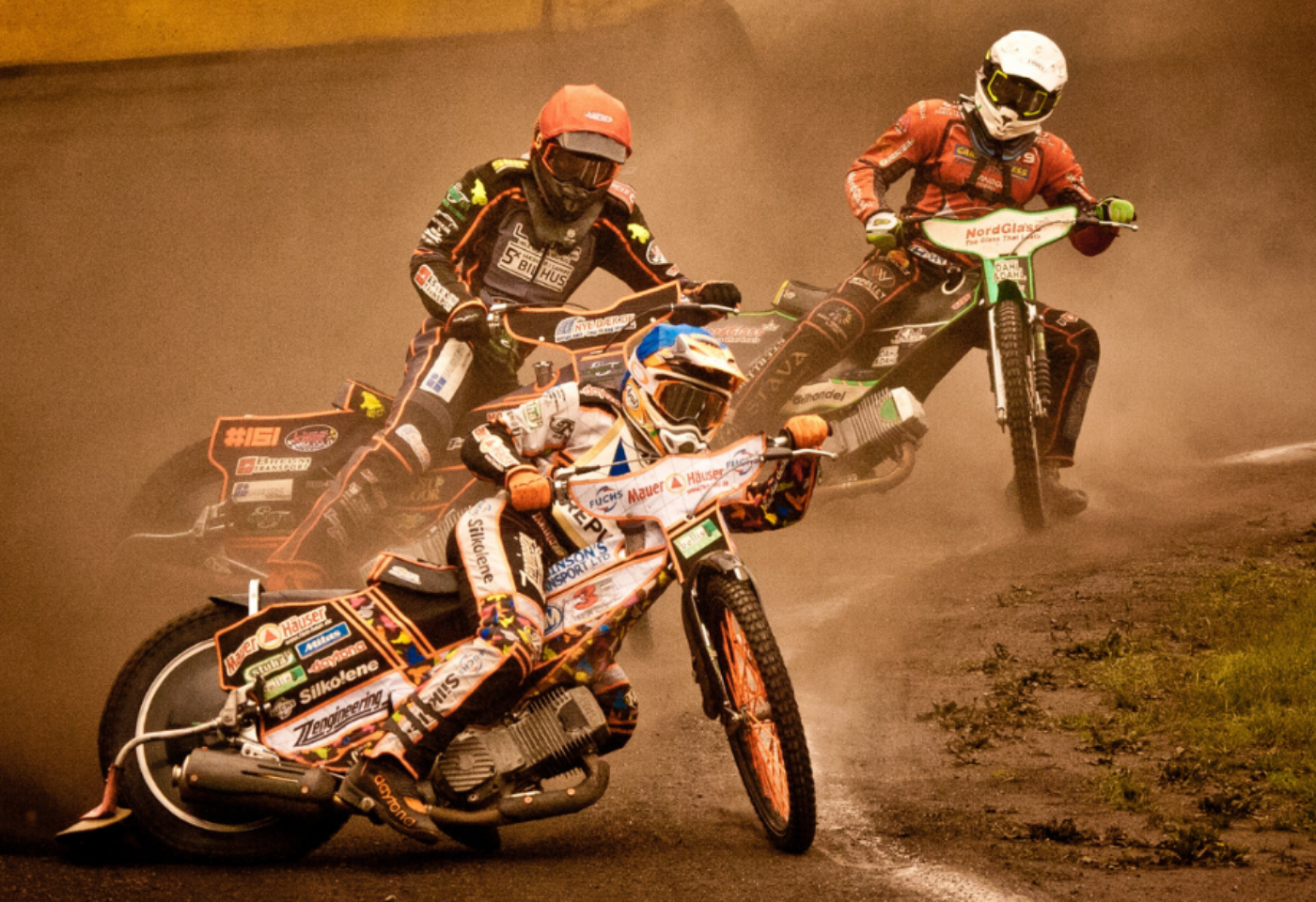
Can a mathematical formula grow a sport’s popularity? In 1935, Speedway proved it could, using Balanced Incomplete Block Design (BIBD) to create an event format as thrilling as it was fair. As leagues compete for fans in a crowded, multi-platform marketplace, should they take inspiration from Speedway’s highlight-friendly BIBD system? Perhaps it’s time to revive this overlooked blueprint and unlock its potential for today’s sports.
Regional riders line up, far away from the 50,000 fans at Speedway GP Poland 2024.
Speedway: A Case Study for BIBD’s Potential
In the 1930s, Speedway was still finding its footing. Four riders tore around oval tracks on brakeless bikes, each race lasting just 60 seconds. The brevity of these contests belied their intensity, but the limited number of races left fans wanting more. The 1934 World Championship at Wembley Stadium featured just nine races[1] — quarterfinals, semifinals, and a final — delivering less than 10 minutes of actual racing. Despite drawing tens of thousands of fans, the format lacked the structure needed to satiate audiences.
The breakthrough came in 1935, inspired by British mathematician T.P. Kirkman. Known for his famous 1850 Combinational Puzzle[2] — focused on arranging groups so that every pair meets exactly once — Kirkman’s principles laid the foundation for BIBDs. The BIBD framework uses two simultaneous equations and five parameters to create balanced heats (see Maths Appendix); in practical terms, they’re a clever maths trick that enables knockout or long-form racing events to be converted into ‘heats & finals’ formats with numerous sporting and commercial advantages. Speedway adopted BIBDs to create a 20-heat format where 16 riders faced each opponent once. Points for every heat (3 for 1st, 2 for 2nd, 1 for 3rd, 0 for 4th) determined who advanced to the semifinals and final.
Visualisation of Speedway’s 20-heat schedule using the BIBD framework.
The impact was immediate. By the late 1930s, Speedway attendances were rising at a 13.3% annual rate[3], peaking with 95,000 spectators for the 1938 World Championship at Wembley[4]. The format’s night-long league, where every heat mattered, delivered sustained excitement and highlight-reel moments. Today, FIM Speedway GP’s fast-paced, short-form action has helped it capture a younger audience, with 47% of fans under 30 —outpacing Formula E (36%) and far surpassing IndyCar (18%)[5]. With a 10-round World Championship and 33 million fans worldwide[6], Speedway stands as proof that BIBDs can transform a sport’s popularity.
1936 Speedway World Championship attended by 74,000 fans [7]
Beyond Speedway: BIBDs’ Potential in Sports
BIBDs may sound complex, but for fans, they’re simple: every competitor faces each other once in the heats. For organisers, they deliver fairer competition, more excitement, and increased commercial opportunities. Here’s why modern sports promoters should take a fresh look at this forgotten formula:
Fans Demand Innovative Formats
Sports must innovate — or risk falling behind. 76% of fans say, “governing bodies should embrace format change to ensure their sport stays relevant.[8]” The Hundred in cricket and padel’s Hexagon Cup prove faster, engaging formats attract new audiences[9]. Meanwhile, stagnant leagues fall behind — 2024 saw the FIA strip World Rallycross of its promoter’s license, amid declining interest for the traditional knockout-format events[10]. By splitting long races into shorter, high-stakes heats, BIBDs create more excitement without extending event duration. Unlike knockout formats where competitors are eliminated early, BIBDs also keep everyone in the mix longer, sustaining tension throughout the event.
More Drama, More Moments, More Reach
BIBDs are highlight factories. Each heat delivers a decisive moment, with constant leaderboard shifts and narrow qualification margins keeping fans on edge. Short-form content dominates digital platforms, and BIBDs naturally generate more shareable clips — dramatic overtakes, photo finishes, and emotional reactions perfect for TikTok, Instagram, and YouTube. As linear TV viewership declines year-on-year[11], 73% of fans now primarily follow sports through social media[12]. Optimising competitions for digital short content is no longer a secondary objective — it’s becoming the primary focus for sports leagues. With more frequent breaks between heats, broadcasters can capture live interviews that deliver raw, emotional soundbites, boosting fan engagement across traditional and social media.
Decline in Average UK Linear TV-Viewing Minutes per Day (2010-2024)
Maximised Commercial Opportunities
More heats mean more branding opportunities. Sponsors gain increased exposure through starting lineups, finish-line gantries and leaderboard graphics. Unlike single-race formats that concentrate airtime on a few competitors, BIBDs ensure every participant receives near-equal coverage, boosting the value of individual athlete sponsorships. Broadcasters benefit from flexible programming: full events can stream on OTT platforms while the final heats air in prime-time TV slots, maximising total viewership and increasing sponsorship value. Breaks between heats also provide more frequent, standardised ad slots, boosting broadcast revenue.
Whilst broadcasters vary, European sports broadcasts typically allow 9–12 minutes of ads per hour — Speedway delivers 18–20 minutes. For an established B-Tier series, that expanded inventory could drive a seven-figure uplift in rights value per season — giving BIBD-based leagues stronger leverage in rights negotiations.
Fairness Meets Flexibility
Fairness is hardwired into BIBDs. Every competitor faces each opponent exactly once, eliminating scheduling bias and ensuring success is earned, not lucked into. Built-in rest periods[14] prevent fatigue from skewing results, while the algebraic structure allows organisers to scale events to suit their needs. Whether it’s six or sixty competitors, BIBDs can be adapted to different sports, competition sizes, and event lengths without sacrificing fairness or excitement. Without veering too far off track, BIBDs have most potential for B-Tier racing properties like track cycling, motorsports, and athletics. However, they can also be easily adapted to non-racing sports like golf and esports. For examples of potential formats, see the Maths Appendix.
The Checkered Flag
BIBDs transformed Speedway from a fledgling motorsport into a global product — and their potential extends far beyond the dirt track. By delivering fairer competition, more excitement, and greater commercial opportunities, they offer a proven framework for modern sports. As fans shift to digital platforms and demand faster, more engaging formats, promoters may now be forced to evolve. Who knows? The secret to staying ahead might just be hidden in a combinatorial mathematics textbook.
You may also like...

Will 2026 be a turning point for Super League’s TV rights?
An in-depth look at the growing gap between Super League and Prem Rugby broadcast valuations, and why market structure, not audience demand, is driving the...
SailGP’s winning formula: The power of branding
An analysis of SailGP’s team model and why national identity, combined with sponsor branding, delivers value for fans and partners.

Revisiting the Elimination Mile
A look at why alternative formats are quietly re-emerging in athletics, and whether the Elimination Mile could offer a low-risk way to deepen fan engagement.
Platformation did a great job for MarkSetBot on this project. It really helped launch both our marketing and fundraising efforts. We highly recommend them!
Matthew Morin
A valuable partner offering constructive input and innovation from across the world of football and beyond.
Petr Zascherinsky
Platformation have provided great insight and recommendations across our broad, diverse portfolio of events and content.
Walter Böhm
Andrew’s experience and understanding of the field offered great confidence and the rigour they applied to such a complex challenge was best in class.
Fiona Fletcher-Smith
Andrew and his international network of suppliers delivered a comprehensive set of valuable insights.
Simon Thomas
Resourceful and skilled, with a fantastic network and incredible experience. A valued and trusted business partner.
David Sim
Our Services
We support organisations at different stages of the sponsorship lifecycle, from understanding value to applying insight in practice. Each service addresses a specific question, while together they provide a clear, connected view of sponsorship performance.