
Insight
Is Strade Bianche Now Cycling’s Sixth Monument?
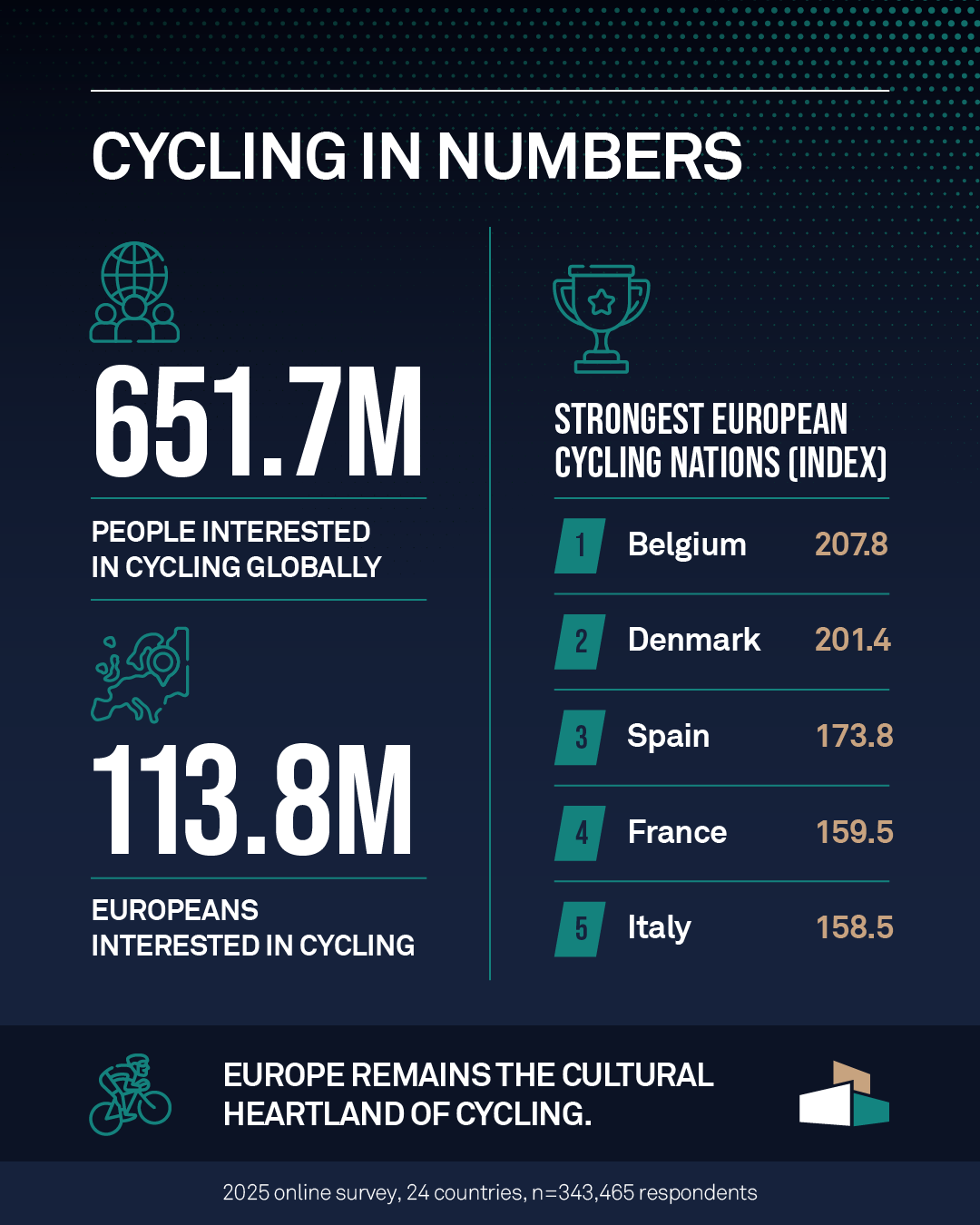
Global interest in cycling is estimated at 651.7 million with Europe remaining the cultural heartland of cycling. 113.8 million Europeans show an interest in cycling; Europe’s Top 4 cycling nations, pro capita, are Belgium, Denmark, Spain, France and Italy. The world of cycling further breaks down into professional cycling and leisure. Within professional cycling we further branch into the various disciplines like road cycling, track, gravel, mountain biking, BMX and cyclo-cross.
For the purpose of this article, we have focused on road cycling and within the professional road cycling calendar, we analyse the one-day races.
Professional road cycling’s calendar is built around its so-called ‘Monuments’ – five one-day races, each over a century old, considered the sport’s most prestigious single-day contests.
They are:
- Milan–San Remo, the longest race on the calendar;
- Tour of Flanders, a Belgian national obsession;
- Paris–Roubaix, known for its brutal cobblestone sectors;
- Liège–Bastogne–Liège, the oldest of all;
- Il Lombardia, a late-season farewell raced through autumn leaves in northern Italy.
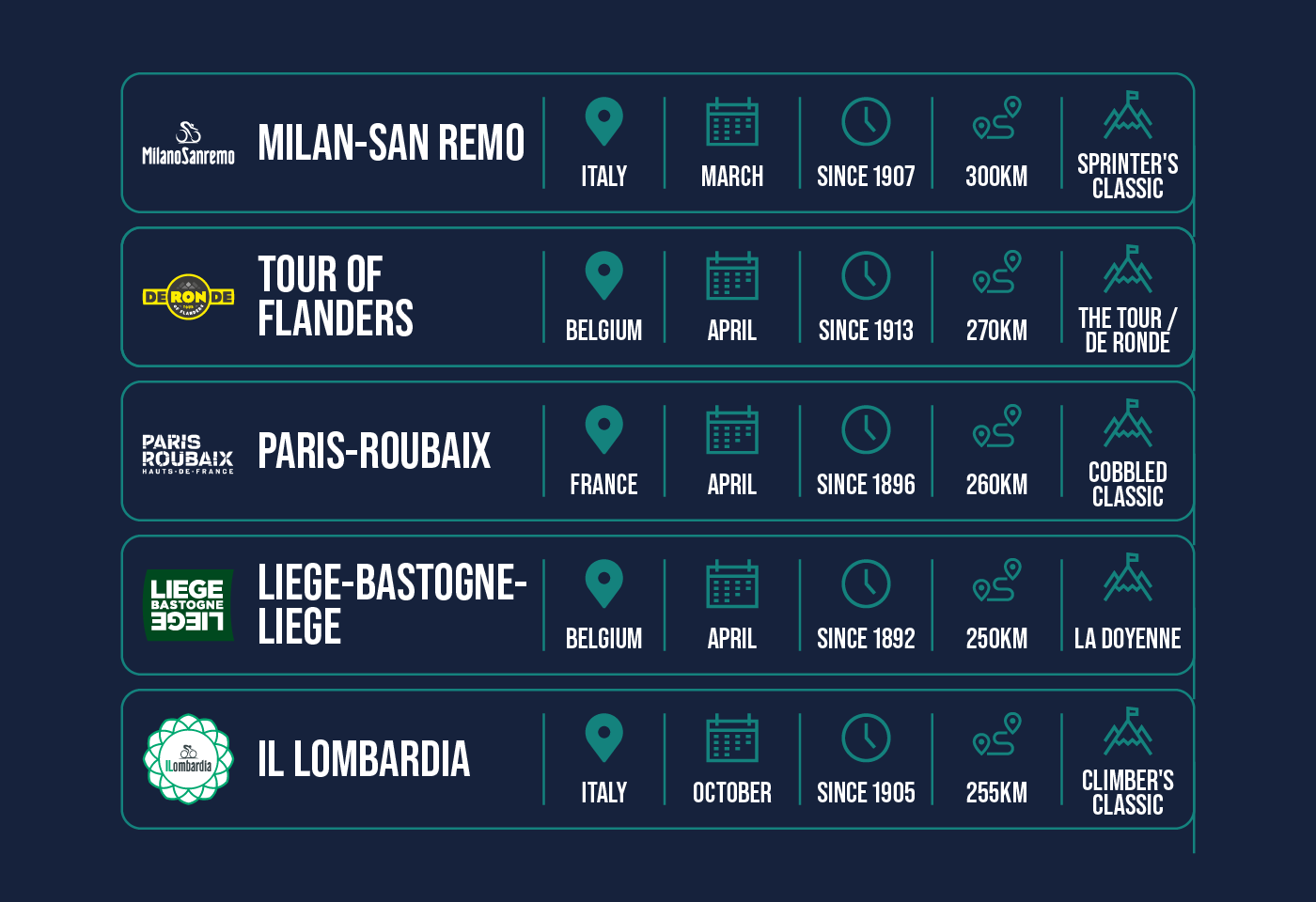
Overview table of the five monuments
To win even one is a career-defining achievement. To win all five, as the Belgian legend Eddy Merckx did, is considered one of sport’s most extraordinary feats.
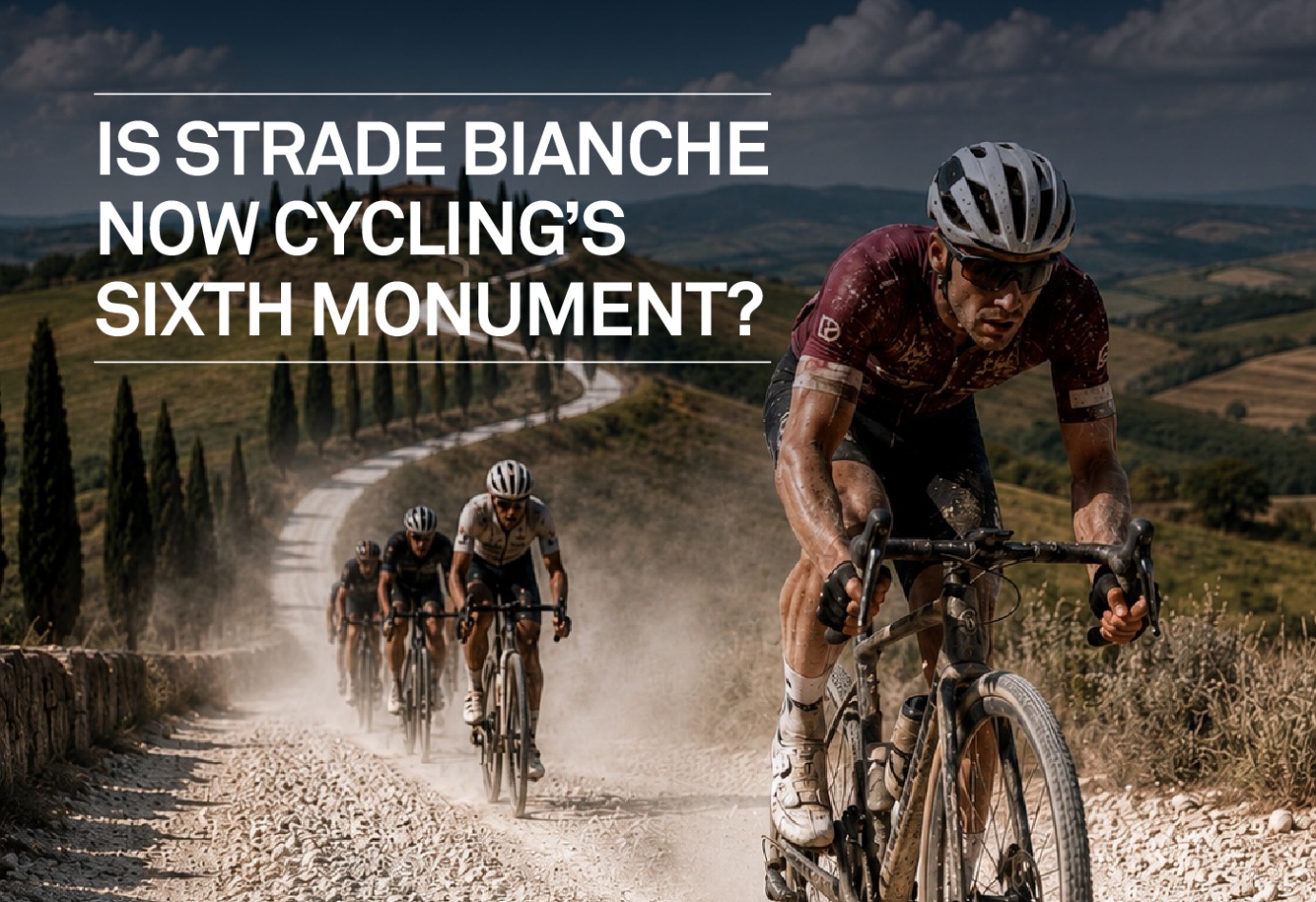
Into this world, a young upstart has arrived. Strade Bianche – Italian for ‘white roads’ – is a race held across the gravel tracks and cypress-lined hills of Tuscany. Founded only in 2007, it has no history to speak of by cycling’s standards. And yet, by almost every measure of modern relevance, it is threatening to become cycling’s sixth Monument.
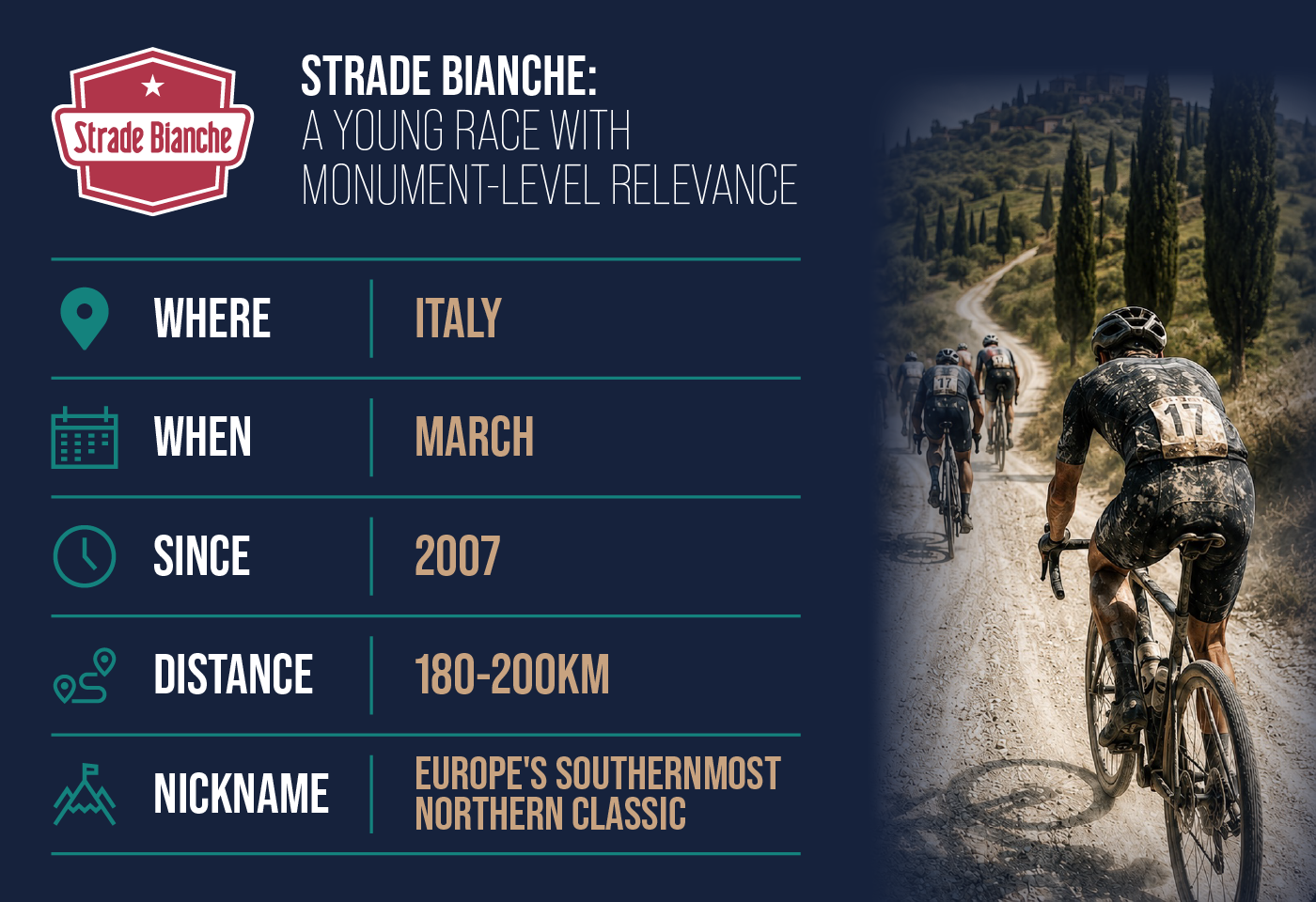
Overview table of Strade Bianche
Strade Bianche, is now the 5th largest one-day race by Online Interest. How has this happened?
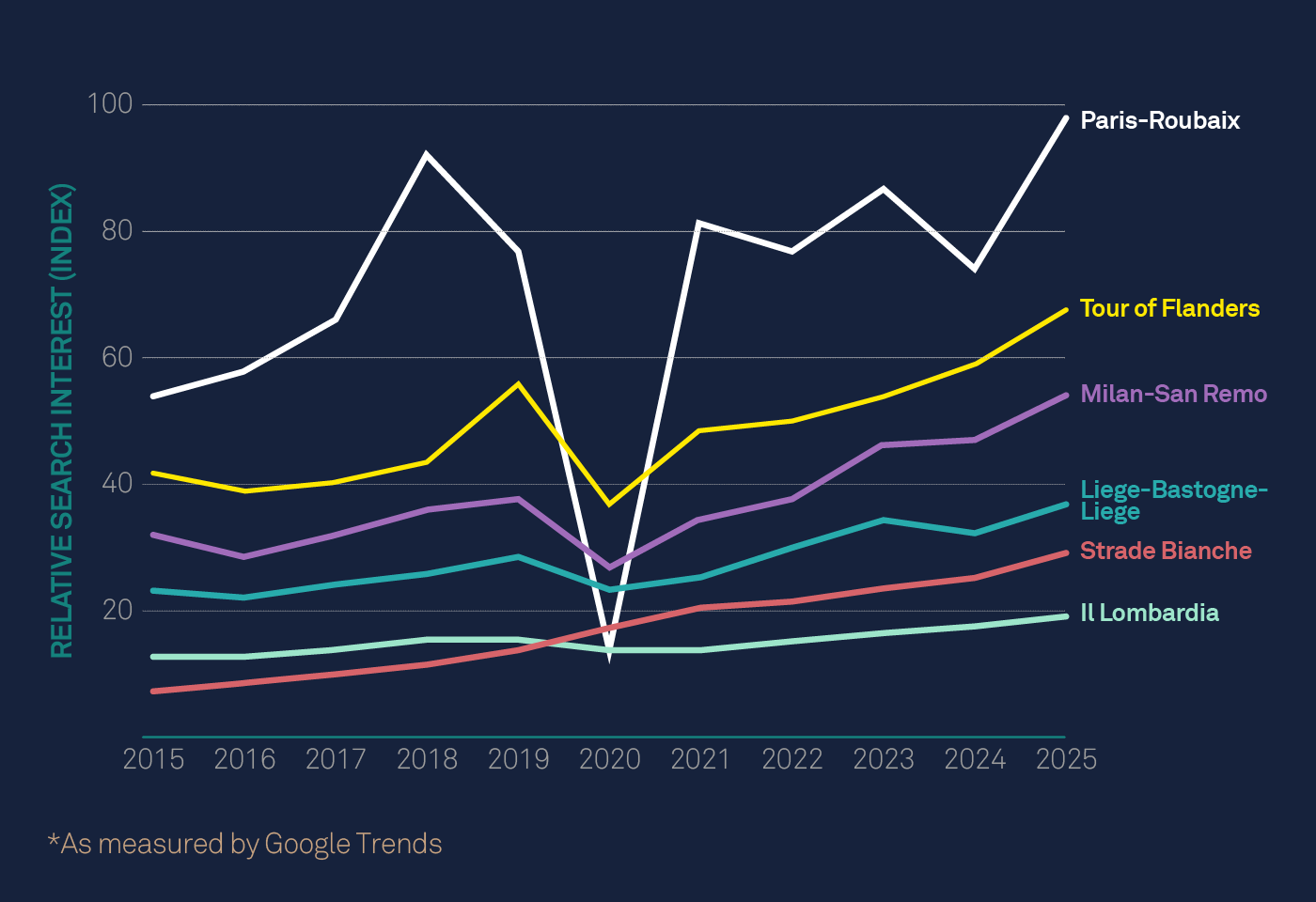
Global Online Engagement by Race Over the Last 10 Years
Strade Bianche is everything the modern cycling fan demands. Whilst Milano-San Remo is famously a race decided in its final hour, Strade has become a race of attrition and long-range aggression, frequently igniting 70 to 100 kilometres from the finish. In a more competitive entertainment landscape, where attention must be earned through true spectacle, rather than simply history, that matters greatly by promising fans 2-3 hours of entertainment worthy of cancelling Saturday plans. On those merits, Strade is accelerating quickly whilst Liège–Bastogne–Liège and Il Lombardia, by contrast, appear lacklustre in trajectory.
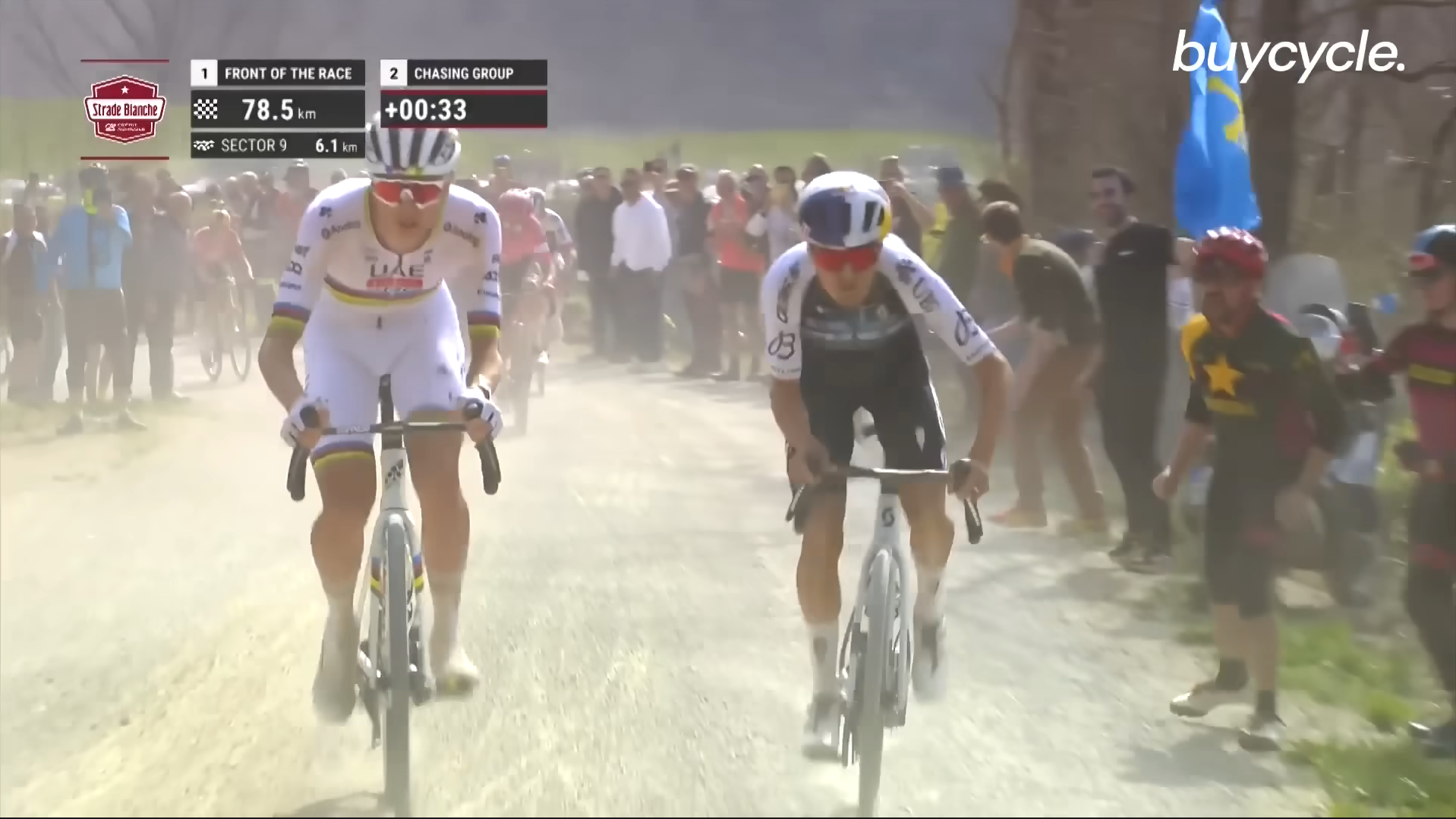
Pogacar & Pidcock Attack on Strade Bianche’s White Gravel 80km Out
The question of whether Strade Bianche deserves Monument status has recently been debated by fans and pundits. What has been missing is any real measurement. The data presented here provides it. On engagement, Strade Bianche is not merely knocking on the door; it has already walked through it. It now ranks as the 5th most engaged with one-day race in the world, ahead of one existing Monument, and its growth trajectory shows no sign of slowing.
The contrast of procentual change in global online engagement over the past decade could not be crasser: while the global engagement of the five “Monuments” increased between 36% and 120%; global engagement for Strade Bianche has increased by whopping 371%!
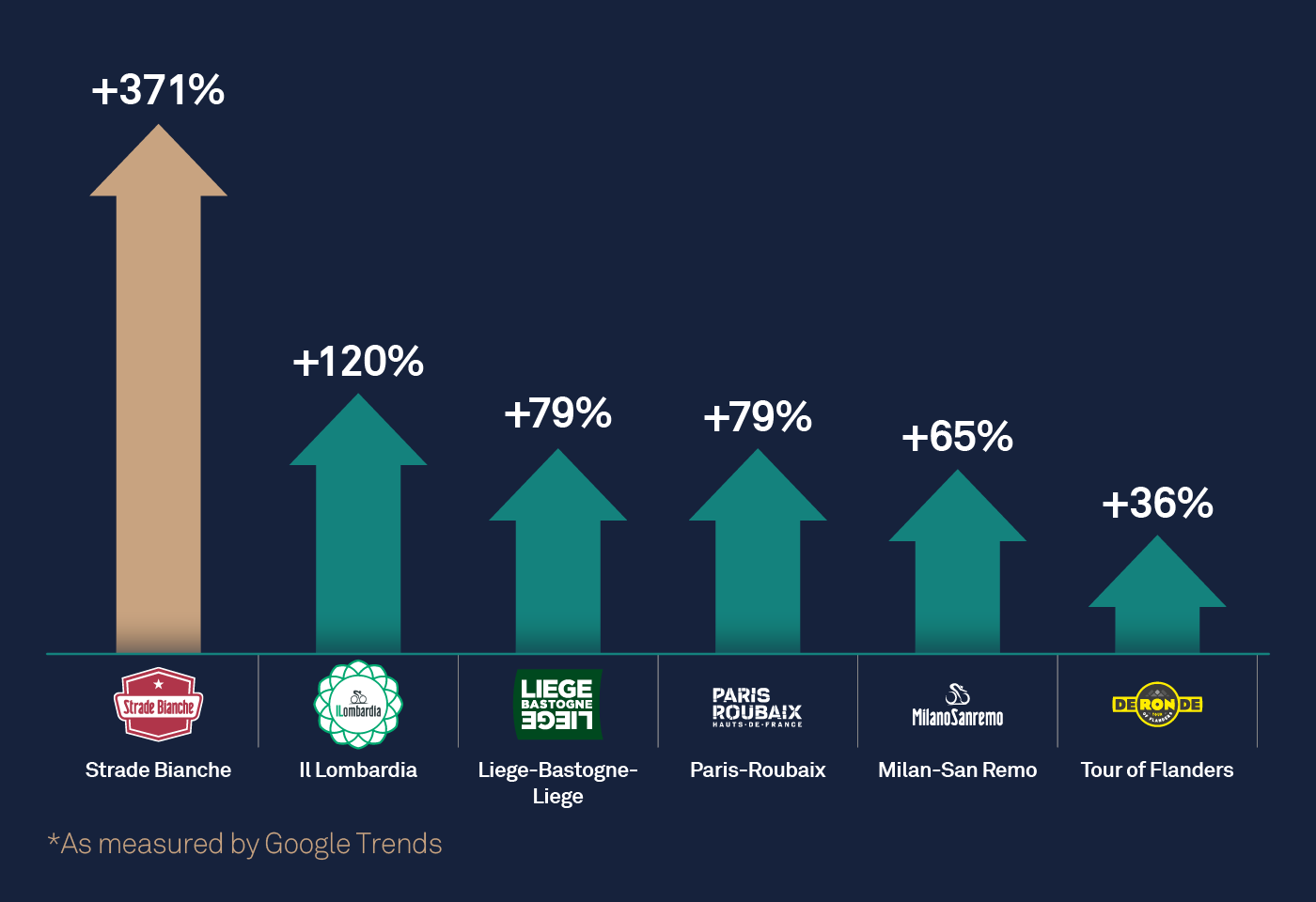
% Change in Global Online Engagement by Race (Last 10 Years)*
The sport’s governing body, the UCI, has form in adapting to new realities – it formally elevated five one-day races with Monument status to earn extra UCI-Ranking points in 2016. The case for doing so again, for a sixth time, has never been stronger. Cycling’s Monuments and UCI-Rankings have always been a reflection of what the sport valued most. The data now tells us what it values; Strade Bianche is already a Monument in everything but name and UCI-Rankings points.
*As measured by Google Trends
You may also like...

What Are You Actually Buying When You Commission a Sponsorship Valuation?
Sponsorship valuation is our flagship service. We’ve done it for years, at the highest levels of the industry, for some of the most consequential partnerships…
The other World Cup: what a week at the Gothia Cup taught us about the real value of youth football
This summer, while much of the world was watching the FIFA World Cup unfold across the United States, Mexico and Canada, my family and I…
What the 2026 World Cup is quietly telling us about the commercial future of sport
Amongst all the noise surrounding this year’s World Cup, with its naming rights controversies, hydration break furore and geopolitical fault lines, two rather quieter stories…
How to define value in modern sponsorship
Boards want evidence. Stakeholders see value differently. Our framework for defining sponsorship value around purpose, performance and efficiency brings clarity before the contract is signed.
Platformation did a great job for MarkSetBot on this project. It really helped launch both our marketing and fundraising efforts. We highly recommend them!
Matthew Morin
A valuable partner offering constructive input and innovation from across the world of football and beyond.
Petr Zascherinsky
Platformation have provided great insight and recommendations across our broad, diverse portfolio of events and content.
Walter Böhm
Andrew’s experience and understanding of the field offered great confidence and the rigour they applied to such a complex challenge was best in class.
Fiona Fletcher-Smith
Andrew and his international network of suppliers delivered a comprehensive set of valuable insights.
Simon Thomas
Resourceful and skilled, with a fantastic network and incredible experience. A valued and trusted business partner.
David Sim
Our Services
We support organisations at different stages of the sponsorship lifecycle, from understanding value to applying insight in practice. Each service addresses a specific question, while together they provide a clear, connected view of sponsorship performance.