
SailGP’s Winning Formula: The Power of National Branding
How co-branded national teams give fans identity – and sponsors meaningful IP
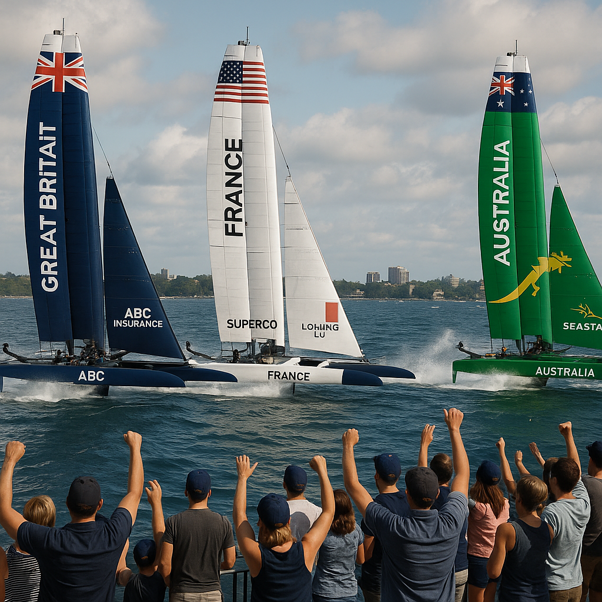
SailGP’s approach to team identity feels obvious. Each team competes under a national flag, co-branded with a major sponsor: Emirates Great Britain, Red Bull Italy, Tommy Hilfiger USA. It seems like the kind of model many leagues would adopt, and yet, SailGP is alone in doing so.
This structure gives the series a competitive advantage in the fight for fan intrigue. For fans, you don’t need to learn a new franchise, you just support your country. That’s especially helpful in a sport like sailing, where casual audiences are unlikely to follow athletes or understand the format, enabling the national teams to do the emotional heavy lifting of forming a narrative.
According to GWI, 78% of global sports fans support their national sports team – a number that far exceeds engagement with most sponsor-only brands. National identity, even loosely applied, offers a shortcut to relevance.
It gets even better: most fans likely assume that all SailGP sailors represent their countries of origin. In reality, crew nationality are mixed – but very few fans seem to notice. This allows the competition in many ways to ‘have its cake and eat it.’ Transfers between teams create in-season drama and maintain competitive balance, all while allowing nations like Brazil (which might have corporate backing but lack top sailing talent) ability to compete. The brand of “Team France” or “Team Australia” is strong enough to carry the narrative.
For sponsors, this setup unlocks something particularly valuable: strong geographic specificity. In an industry increasingly focused on market-level activation, SailGP gives global brands a ready-made platform in a market of their choosing. Red Bull can run activations in Italy positioning itself as a backer of Italy’s national sailing team – perhaps even featuring vessels on limited editions of their cans in the country. Tommy Hilfiger can do the same in the U.S. with branded clothing. It’s far more than just logo placement – it’s campaign-able IP.
The approach also creates long-term coherence. In sports like cycling, most top teams are sponsor constructs – Visma–Lease a Bike, Ineos Grenadiers, Lidl–Trek – with little connection to place. These identities are effective for visibility but fragile in the long run. Sponsors leave, names change, and continuity is lost. The Tour de France moved away from national teams in 1962. SailGP, in a sense, has brought them back – and made them commercially viable through their joint naming model of ‘Team Brand – Country’.
It also helps that the sponsor names themselves carry weight. Brands like Prada, Red Bull, and Tommy Hilfiger bring prestige, luxury, and edge to a sport that’s inherently high-end. In a series built around elite catamarans and premium host cities, those associations matter and reinforce the aspirational tone of the product.
Strip the national layer out, and the picture changes. If these teams were just called Team Red Bull or Team Tommy Hilfiger, the emotional connection would fade fast. Fans wouldn’t know who to support. In making something simple, SailGP has landed on something rare: a team model that works for fans, broadcasters, and brands alike. There aren’t many other leagues that could say the same.
Platformation, July 2025